
Did you know that a driver in the UK puts the wrong fuel in their car approximately once every three minutes? If you're currently sitting at a petrol station staring at the pump in disbelief, you aren't alone. The immediate panic is usually followed by a single, terrifying question: have I just destroyed my engine? You might be worried about a repair bill exceeding £5,000 or wondering if you can just drive the car a short distance to get home. Stop. Don't turn the key. Professional contaminated fuel removal is the only safe way to protect your vehicle's high-pressure fuel system from permanent, catastrophic damage.
We understand the stress of being stranded at the roadside with your plans in tatters. It's an overwhelming situation, but it doesn't have to result in a full garage strip-down or a month of wages spent on parts. This guide will show you how to identify the signs of contamination and manage the crisis effectively. We'll explain the technical necessity of professional extraction and how we verify your engine's safety on-site. You'll learn why a certified recovery process is a cost-effective alternative to dealership repairs that gets you back on the road with total peace of mind.
Key Takeaways
- Stop your engine immediately at the first sign of trouble to protect sensitive high-pressure fuel components from permanent oxidation.
- Learn to recognise critical symptoms like engine misfiring or unusual exhaust smoke that indicate your fuel system has been compromised.
- Discover why professional contaminated fuel removal performed on-site is a faster, more affordable alternative to a traditional garage strip-down.
- Understand the technical differences between petrol, diesel, and AdBlue contamination and how each affects your vehicle's performance.
- Access rapid 24/7 support across the North East to ensure a safe, certified recovery that preserves your car's warranty and engine health.
Understanding Contaminated Fuel: What it is and Why it Matters
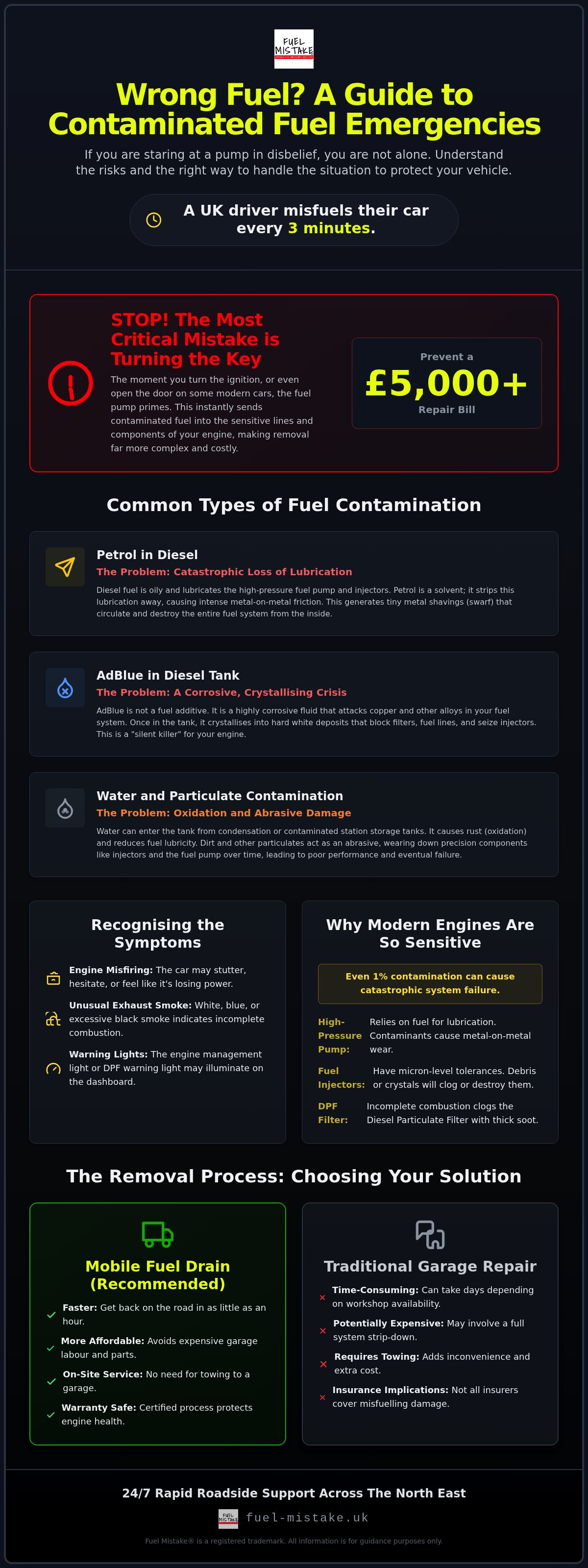
Fuel contamination is a chemical emergency. It occurs when any substance, liquid or solid, enters the tank and alters the combustible properties of the fuel. Whilst most people think of misfuelling, contamination also includes water from condensation or dirt from a degraded storage tank. Modern Common Rail Diesel engines are hyper-sensitive to these changes. Even 1% contamination can cause the system to fail. Beyond the mechanical risk, driving with known contamination has serious legal and insurance implications. Most UK insurers will refuse a claim for engine damage if you've knowingly driven the car after a misfuel or whilst the fuel system is compromised. Dealing with this requires specialised contaminated fuel removal to ensure every trace of the offending substance is purged before it reaches the heart of the engine.
How Contamination Impacts Modern Engines
Modern engines use high-pressure fuel pumps that rely on the fuel itself for lubrication. When you introduce a solvent like petrol or a contaminant like water, that lubrication vanishes. This leads to metal-on-metal contact, creating microscopic shards that travel through the system. Your fuel injectors, which have tolerances measured in microns, will clog or suffer from "tip-blowing" as the pressure spikes. For larger storage issues or fuel that has sat for long periods, technicians often discuss What is Fuel Polishing, a process used to filter out water and microbial growth from fuel supplies. Contaminated fuel also results in incomplete combustion, which quickly clogs the Diesel Particulate Filter (DPF) with thick soot and unburnt chemicals.
The Immediate Danger of Turning the Key
The most critical mistake you can make is turning the key. In most modern vehicles, the fuel pump primes the moment the ignition is turned on, or even when the driver's door is opened. This sends the contaminant straight into the fuel lines. Once the engine starts, the fluid is circulated through the entire fuel rail, making contaminated fuel removal far more complex and expensive. Have you already started the car? Stop immediately. Never believe the myth that "topping up" the tank will dilute the problem enough to save the engine. In a high-precision system, even diluted contamination remains a destructive abrasive that will eventually lead to a breakdown. You need a professional to drain the tank and flush the lines to prevent a £5,000 repair bill.
The Four Most Common Types of Fuel Contamination
While misfuelling is the most frequent reason drivers call for help, it isn't the only way your tank can become compromised. In the UK, a driver makes a fuel mistake approximately once every three minutes. This often happens because a petrol nozzle (21mm) fits easily into the larger diesel filler neck (25mm). However, environmental factors and newer additives like AdBlue present their own unique sets of challenges. Understanding what is currently sitting in your tank is the first step toward effective contaminated fuel removal and protecting your vehicle's long-term health.
Petrol in Diesel: Loss of Lubrication
Diesel fuel acts as a lubricant for the high-pressure fuel pump and injectors. Petrol, conversely, is a solvent. When you introduce petrol into a diesel system, it immediately strips away the protective lubricating film. This causes intense metallic friction, leading to "swarf"-tiny metal shavings that circulate through the engine and destroy components from the inside out. If you've realised your error at the pump, read our Misfuelling Guide: What to Do If You Put the Wrong Fuel in Your Car (2026) for immediate safety steps.
AdBlue Contamination: A Corrosive Crisis
AdBlue is an exhaust fluid, not a fuel additive. If it's accidentally poured into the diesel tank, it becomes a "silent killer" for your engine. AdBlue is highly corrosive to copper and other alloys found within your fuel system. Once inside the tank, it begins to crystallise, forming hard white deposits that block filters and seize injectors. Because it's heavier than diesel, it sinks to the bottom, meaning the pump draws it in almost immediately. For a detailed breakdown of the recovery process, consult our AdBlue in Diesel Tank: Emergency Guide and Removal Advice (2026).
Water and Particulate Contamination
Environmental contamination is often out of the driver's control. Water can enter your tank through heavy condensation or via faulty storage at older petrol stations. This moisture leads to the growth of "diesel bug"-a microbial sludge that thrives at the fuel-water interface and blocks lines. You may also face rust or debris from degraded underground tanks. These substances are significant hazards of fuel contamination that standard vehicle filters simply cannot manage. If your car is hesitating or blowing unusual smoke, you likely need professional contaminated fuel removal to purge the system and prevent a total breakdown. Our team provides rapid, on-site assistance across the North East to help you avoid these costly mechanical failures.
Recognising the Symptoms: Is Your Engine at Risk?
Does your car feel different since you last visited the pumps? Identifying the signs of a compromised fuel system early can be the difference between a simple flush and a total engine replacement. Symptoms often manifest within the first few miles of driving as the contaminated mixture reaches the injectors. You might experience a distinct "jerking" sensation whilst accelerating or notice the engine misfiring during idle. These aren't just minor glitches; they are clear indicators that the combustion properties of your fuel have been altered. If your vehicle begins to behave erratically, pull over safely and switch off the ignition. Immediate contaminated fuel removal is required to prevent these symptoms from escalating into mechanical failure.
Visual cues from the exhaust are equally telling. Pay close attention to the colour of the smoke leaving your tailpipe:
- White Smoke: Often indicates water contamination or petrol in a diesel engine, suggesting the fuel isn't burning correctly.
- Black Smoke: Typically seen when diesel is put into a petrol car, caused by unburnt fuel being forced through the exhaust system.
Modern UK vehicles are equipped with sophisticated sensors designed to protect the engine. Don't ignore dashboard warning lights. Indicators like the "Water in Fuel" light or a flashing "Glow Plug" symbol are urgent distress signals from your car's ECU. If the engine cuts out abruptly after driving only a few hundred yards, the fuel lines are likely saturated with the contaminant.
Early Warning Signs at the Pump
The best time to catch a mistake is before you even start the engine. We call it the "sinking feeling"-that split second you realise the nozzle colour doesn't match your fuel cap. Petrol nozzles in the UK are typically green, whilst diesel is black. If you notice a strange, solvent-like smell or see that the fuel has a different consistency on the nozzle, stop immediately. If you suspect the station pump itself was contaminated due to recent maintenance or heavy rain, report it to the cashier and do not turn your key. At this stage, contaminated fuel removal is a straightforward procedure that keeps the fluid contained within the tank.
Severe Symptoms of Total System Failure
What happens if you miss the early signs? As the situation worsens, you may hear loud, metallic knocking sounds coming from the high-pressure pump area. This is the sound of internal components grinding together without lubrication. Your car might suddenly enter "Limp Mode" during motorway driving, a safety feature that drastically reduces power to protect the drivetrain. In rare, extreme cases involving high levels of oil or certain contaminants, a "runaway" engine scenario can occur where the engine accelerates uncontrollably. This is a high-stakes emergency. Stay calm, keep the car in gear if possible, and use the brakes to bring the vehicle to a halt before calling for professional assistance.
The Removal Process: Mobile Fuel Drain vs. Traditional Garage
Once you've identified a fuel error, you face a critical choice: call a mobile specialist or have your vehicle towed to a local garage. The difference in outcome is stark. A traditional garage typically requires three to five days to book you in, strip the fuel system, and perform a manual clean. Conversely, a professional mobile technician can complete a full system recovery on-site in approximately one hour. This speed doesn't just save time; it prevents the unnecessary costs associated with vehicle recovery fees and multi-day car rentals. For most motorists, a specialist contaminated fuel removal service is the most logical path to getting back on the road without a massive disruption to their week.
Cost is the other major factor. Main dealerships often charge between £1,000 and £5,000 for misfuelling repairs because their internal protocols often mandate the replacement of perfectly functional parts. A mobile drain is a fraction of this price. By choosing an on-site fix, you avoid the "strip and clean" labour rates of a workshop whilst receiving a service that is specifically tailored to fuel system decontamination. If you're currently stranded, choosing a 24/7 mobile fuel drain is the most efficient way to protect your engine and your wallet.
How a Professional Mobile Fuel Drain Works
We use ATEX-certified specialised pumping equipment designed to safely handle flammable liquids in public spaces like petrol forecourts. The process begins by suctioning the bulk of the contaminant directly from the tank. However, simply emptying the tank isn't enough. We perform a high-pressure flush of the entire fuel line and common rail to ensure no residual petrol, water, or AdBlue remains to damage the injectors. Once the system is verified as clean, we prime the engine with fresh fuel and conduct a diagnostic check to ensure everything is running at peak performance. All waste fuel is then taken away for environmentally friendly disposal at a licensed facility, complying with all UK hazardous waste regulations.
Why Main Dealerships Often Quote for New Engines
Why do garages quote such high figures? It's usually a "liability-first" approach. To maintain a manufacturer's warranty, many dealerships will refuse to clean a component, choosing instead to replace the entire fuel system including the pump, injectors, and tank. This is often overkill. A specialist drain can save components that a garage would simply bin, using precision scavenging tools to remove contaminants that a standard mechanic might miss. Because we are mobile, we offer the ultimate convenience of a roadside fix whilst you wait. You don't have to worry about your car sitting in a compound for a week; we solve the problem there and then, providing a "preventative save" that keeps your original engine parts intact and functional.
This principle of professional, specialised removal applies to home maintenance as well. If you have redundant equipment like old aerials or satellite dishes cluttering your property, dishgoodbye.com provides an expert service to safely remove and dispose of them.
Emergency Fuel Removal in the North East: The Fuel Mistake® Approach
When you're stranded at a petrol station in Newcastle or Durham, you don't need a generic national call centre. You need a local specialist who understands the urgency of your situation. Fuel Mistake® provides a dedicated 24/7 rapid response service across the North East, ensuring that expert contaminated fuel removal is never more than an hour away. Our foundation is built on three generations of motor industry experience, led by a technician with a prestige dealership background. This heritage means we don't just drain tanks; we provide a precision service that respects the technical integrity of your vehicle whilst offering the warmth of a family-run business.
Serving Middlesbrough, Newcastle, and Beyond
Our mobile units are strategically positioned to maintain a 60-minute response time across the region. Whether you are in Darlington, Hartlepool, or Bishop Auckland, we can reach you before the panic sets in. We understand that every minute the contaminant sits in your system increases the risk of component oxidation. For those specifically in Teesside, our Emergency Fuel Drain Middlesbrough: 24/7 Roadside Wrong Fuel Recovery service is tailored to the unique traffic patterns and station layouts of the area. We cover the entire stretch from the Tyne down into North Yorkshire, bringing professional-grade scavenging equipment directly to your location.
Why Local Expertise Matters for Misfuelled Cars
Why choose a local family-run business? It's about accountability and specialised knowledge. We are familiar with the specific petrol stations across the North East and often track common contamination reports in the region. This insight allows us to advise you on whether a particular pump issue might be affecting others in the community. Our background in prestige dealerships ensures that we use the correct diagnostic tools for high-end German and British vehicles, protecting your warranty whilst saving you from main dealer prices. We treat every customer like a neighbour because, in this community, we are. This local presence allows us to offer a "No Start, No Fee" promise, ensuring you only pay for a successful recovery.
Booking a technician is simple and direct. Call our emergency line, provide your location and the type of fuel error, and we will dispatch a specialist immediately. We operate on a safety-first basis, prioritising vehicles stranded in dangerous positions or those with vulnerable passengers. Don't risk driving a compromised car another mile. Call Fuel Mistake® now for immediate contaminated fuel removal and let our family-run team get you back on the road safely.
Protect Your Engine and Restore Your Peace of Mind
Dealing with a fuel error is stressful, but it doesn't have to be a disaster. By acting quickly and keeping the ignition off, you've already taken the most important step in preventing permanent damage to your fuel pump and injectors. Remember that professional contaminated fuel removal is a preventative measure designed to save your original engine components and avoid the exorbitant costs often quoted by main dealerships. Whether you're dealing with petrol in diesel, AdBlue contamination, or water ingress, a specialised on-site drain is the most efficient way to get your vehicle back to peak performance.
Our accredited specialist technicians are ready to help with a 24/7 emergency response across Newcastle, Durham, Middlesbrough, and North Yorkshire. We bring three generations of motor industry expertise directly to your location, providing a safe, certified, and cost-effective recovery. Don't leave your car's health to chance or wait days for a garage appointment. Get a 24/7 Emergency Fuel Drain Quote now and let our family-run team handle the hard work for you. You'll be back on the road safely before you know it.
Frequently Asked Questions
Can I drive my car if I have contaminated fuel?
No, you should never drive a car with contaminated fuel. Even a short distance can pull the mixture from the tank into the high-pressure fuel pump and injectors, causing immediate friction damage. If you suspect your fuel is compromised, pull over safely, turn off the engine, and leave the ignition off. This prevents the fuel pump from priming and circulating the contaminant further through your sensitive common rail system.
How much does contaminated fuel removal cost in the UK?
The cost of contaminated fuel removal varies depending on several factors, including the type of vehicle, the volume of fuel, and whether the engine has been started. Standard industry rates for a mobile drain typically increase if the contaminant has already reached the fuel lines and injectors, as this requires a more extensive system flush and filter replacement. Most motorists find this significantly cheaper than the thousands quoted by main dealers.
Will putting the wrong fuel in my car void my warranty?
Yes, misfuelling or using contaminated fuel can void your manufacturer's warranty if the correct recovery procedures aren't followed. Main dealerships often insist on replacing the entire fuel system to maintain warranty coverage. However, a professional mobile drain performed by accredited technicians can often resolve the issue without the need for expensive part replacements, provided the engine hasn't suffered internal mechanical failure or significant component wear during the incident.
How long does a mobile fuel drain take to complete?
A professional mobile fuel drain usually takes approximately 45 to 60 minutes to complete from the moment the technician arrives at your location. This includes the time needed to suction the tank, flush the fuel lines, and prime the system with fresh fuel. It's a rapid, on-site solution designed to get you back on the road much faster than a traditional garage, which may take several days to book.
What happens to the contaminated fuel after it is removed?
Contaminated fuel is classified as hazardous waste in the UK and must be handled according to strict environmental regulations. After removal, the waste fuel is stored in specialised containers and transported to a licensed facility for safe disposal or recycling. Technicians must provide a Hazardous Waste Consignment Note to document that the fuel has been disposed of legally and responsibly, ensuring full compliance with national environmental standards.
Can you remove AdBlue from a diesel tank at the roadside?
Yes, AdBlue can be removed from a diesel tank at the roadside using specialised scavenging equipment. Because AdBlue is highly corrosive and crystallises quickly, it's vital to perform the removal as soon as possible. Our technicians use specific tools to ensure every trace of the fluid is purged from the tank and lines before it can seize the fuel injectors or damage the pump, preventing a major mechanical failure.
Is it possible to clean contaminated fuel and reuse it?
No, you cannot clean and reuse fuel once it has been contaminated with petrol, diesel, or AdBlue. HMRC maintains a zero-tolerance policy regarding contaminated fuel in the road supply chain, and it's a criminal offence to put waste fuel back into circulation. The chemical properties of the fuel are permanently altered, meaning it will no longer provide the necessary lubrication or combustion required for your modern engine to function.
Do I need to change my fuel filter after a misfuel?
We strongly recommend changing your fuel filter after a misfuel, especially if the engine has been started. The filter's job is to trap particulates, and it can quickly become saturated with contaminants or metal shavings if the pump has suffered friction damage. Replacing the filter is a low-cost preventative measure that ensures your engine receives only clean, high-quality fuel moving forward, protecting your injectors from future blockages or performance issues.


